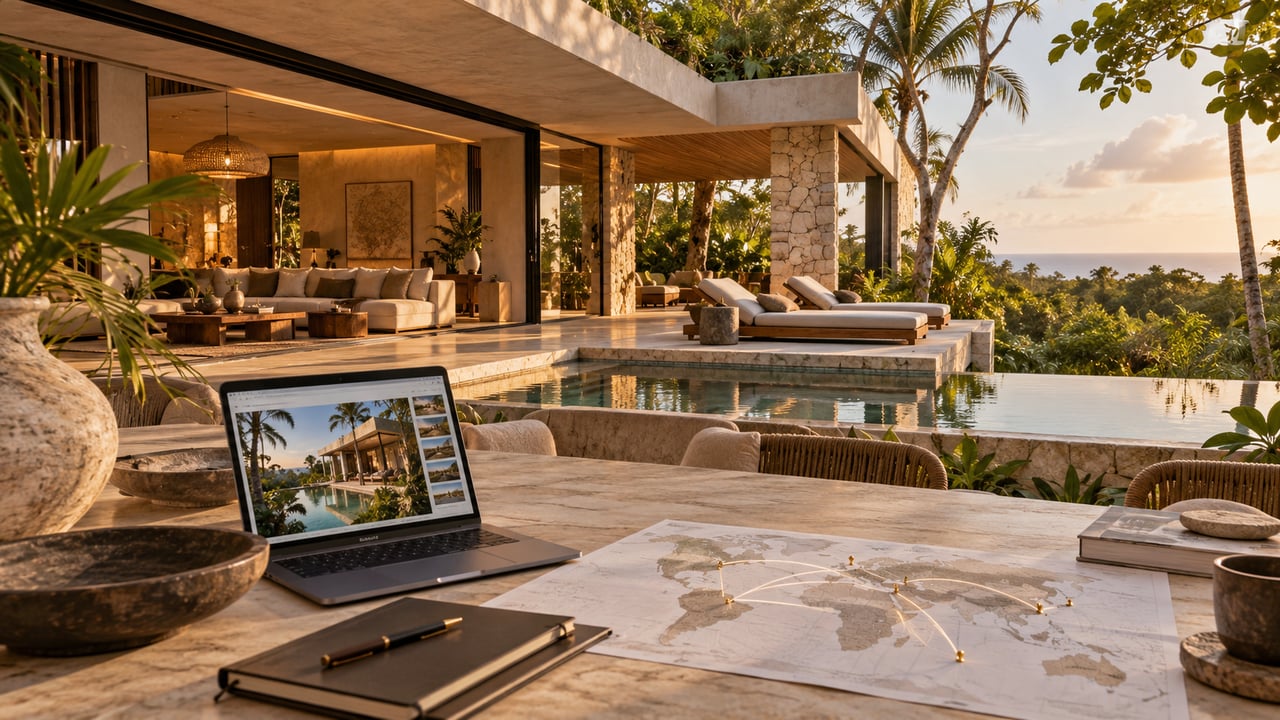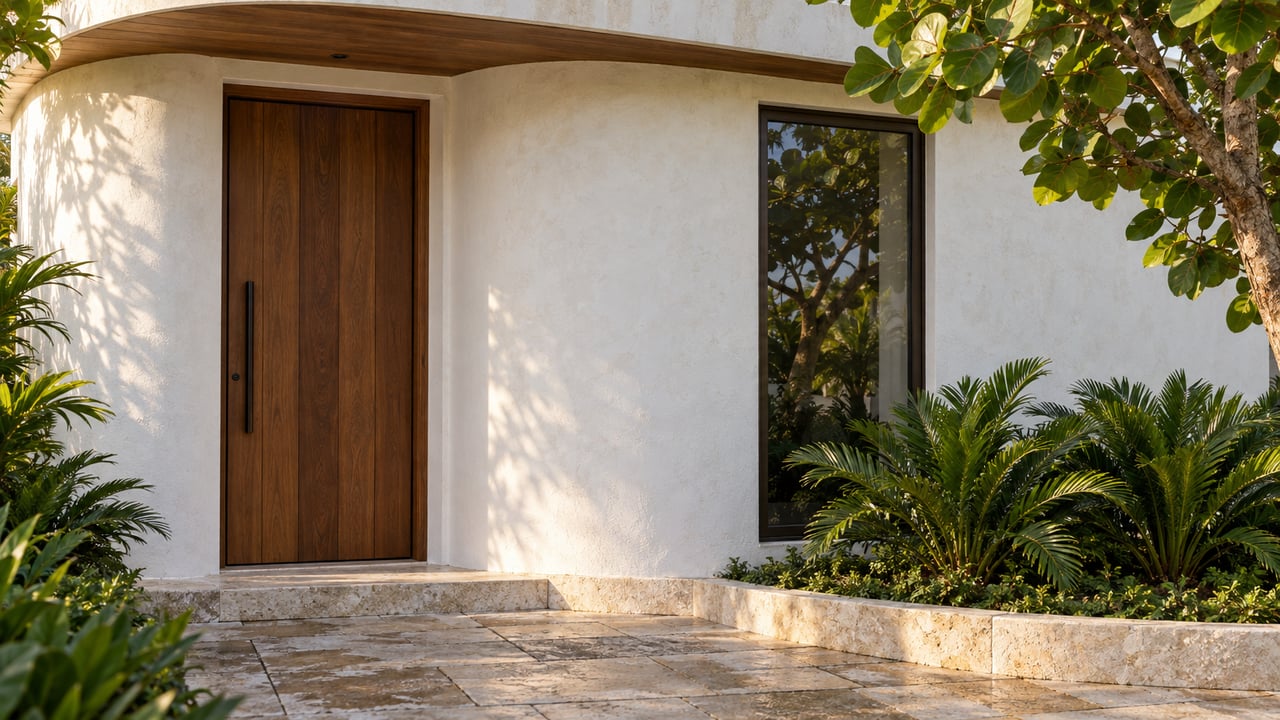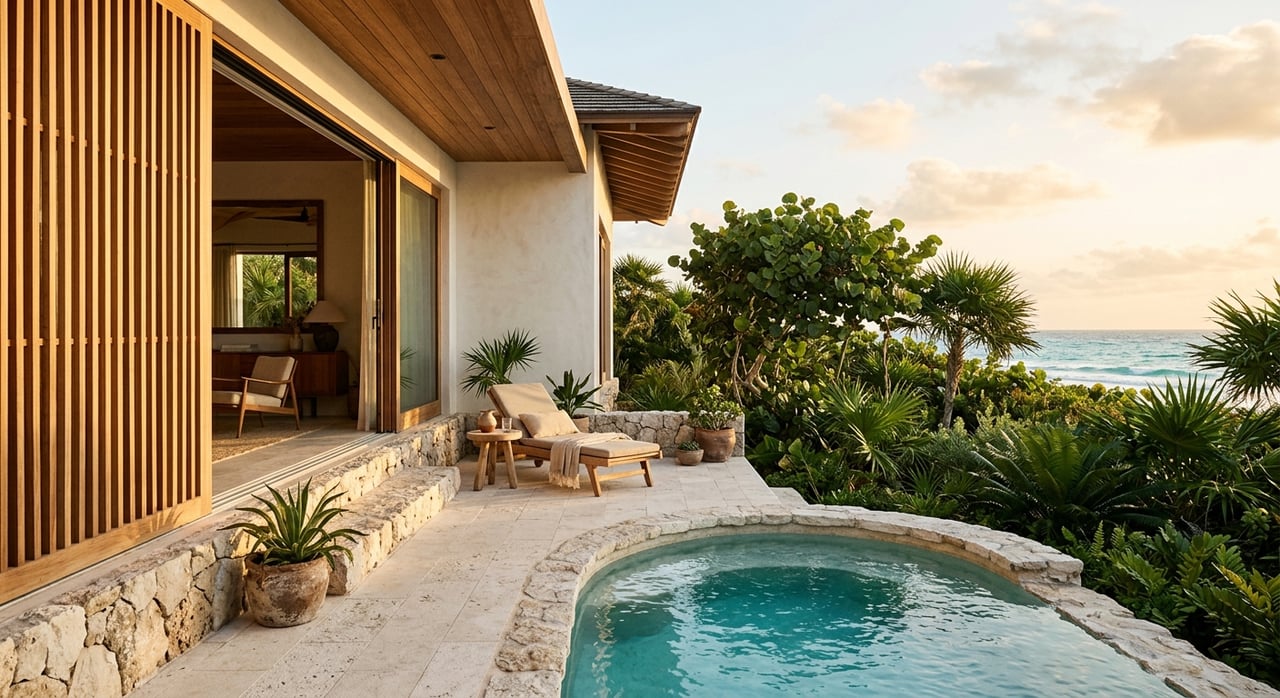
Picture waking up to turquoise water, stepping onto a palm-lined beach road, and realizing your home sits in one of Tulum’s most high-profile coastal corridors. That sounds dreamy, and it is, but owning in Tulum’s Hotel Zone is not the same as owning in a quiet beachfront subdivision. If you are thinking about a second home, lifestyle property, or beachfront investment here, it helps to understand both the beauty and the real operating conditions. Let’s dive in.
Hotel Zone living feels like a resort district
Tulum’s Hotel Zone is best understood as an active coastal tourism corridor with residential pockets, not a typical neighborhood. Official tourism data for July 2024 through June 2025 shows 239 lodging establishments, 11,882 rooms, and average hotel occupancy of 74.2% in Tulum, along with 1,287,850 visitors to the archaeological zone.
For you as an owner, that translates into constant movement. You can expect a lively rhythm shaped by visitors, hotels, restaurants, deliveries, and service teams. The upside is energy, convenience, and access to the beach lifestyle people travel across the world to experience.
The tradeoff is that the area often feels busy. Traffic, arrivals, and activity near the beach road are part of daily life, especially in high season. If privacy and quiet are a top priority, this is an important part of the ownership experience to consider.
The natural setting shapes ownership
The Hotel Zone sits within a highly sensitive coastal environment. Parque Nacional Tulum covers 664.32 hectares along the coast and includes mangroves, beaches, cenotes, dunes, and turtle nesting habitat.
This matters because your ownership experience is shaped by environmental protections as much as by the ocean view. In practical terms, rules around construction, access, and land use are stricter here than in many other beachfront markets.
That protected setting is also part of what makes the area so special. You are not just buying proximity to the sea. You are buying into a landscape where nature plays a leading role in how the area looks, feels, and functions.
Beachfront does not mean fully private beach use
One of the biggest misconceptions about owning in the Hotel Zone is the idea of a private beach. In Tulum, beaches are public goods, and authorities announced new public and free beach access points in 2025.
That means even if your property is on or near the sand, beach access rights still apply. You should expect shared entry points and some foot traffic near access corridors. For many owners, that is simply part of owning in a world-famous beach destination.
This does not take away from the lifestyle appeal. It just means your expectations should match the legal and practical reality of beachfront living in Tulum.
Daily life is active and service-driven
Owning a home in the Hotel Zone often feels more like managing a hospitality-adjacent asset than a suburban house. Because of the tourism-heavy setting, cleaners, maintenance teams, deliveries, and guest arrivals tend to move on resort-style schedules.
Municipal reporting also shows ongoing patrols and proximity-policing across the coastal and hotel zones, including hotels, bars, restaurants, commercial corridors, and major avenues. That reinforces the idea that this area operates as an actively managed tourism corridor.
For you, convenience is a major plus. Dining, beach clubs, and wellness-focused experiences are close at hand. At the same time, a smooth ownership experience usually depends on planning for access, housekeeping, routine checks, and property care.
Weather plays a bigger role here
Tulum has a warm subhumid climate, with a dry season from December through April and most rainfall from May through October. Tropical storms and hurricanes are part of the local climate pattern, with the most relevant impacts typically noted from July through September.
That makes winter and early spring the most comfortable period for consistent beach-centered living. Late summer and fall can be more weather-sensitive, which affects everything from travel plans to outdoor enjoyment.
Winter nortes can also bring strong winds, higher surf, and rougher sea conditions. If you own here, weather readiness is not an extra consideration. It is part of the lifestyle.
What that means for your home setup
A Hotel Zone property benefits from features and planning that suit coastal conditions. You will want to think carefully about:
- Outdoor furniture durability
- Pool and terrace maintenance
- Humidity exposure
- Glazing and storm readiness
- Routine property checks during wetter months
These details may sound operational, but they make a real difference in how easy and enjoyable ownership feels over time.
Sargassum can affect the beach experience
Sargassum is a recurring reality along the Quintana Roo coast. State and federal response efforts continue each year, and authorities have noted that shoreline conditions require coordinated monitoring and cleanup.
For you, this means the beach in front of or near your property can change from week to week. Some days may look postcard-perfect. Other periods may involve visible seaweed and more cleanup activity along the shoreline.
The key is realistic expectations. The Hotel Zone still offers one of the most sought-after beachfront lifestyles in the region, but the beach experience is not identical every day of the year.
Foreign buyers usually use a fideicomiso
If you are a foreign buyer, the legal structure is one of the most important parts of the purchase process. Mexico’s Foreign Ministry states that foreigners cannot acquire direct title to land within 50 kilometers of the coast, so residential property in the restricted zone is typically held through a bank trust called a fideicomiso.
The trust is formalized through a public deed and can have an initial term of up to 50 years. For many international buyers, this is the standard ownership path for a second home in Tulum’s coastal areas.
This is where clear, bilingual guidance matters. Cross-border buyers usually feel more confident when the legal structure, timeline, and documentation are explained step by step from the start.
Coastal rules matter before you buy
In the Hotel Zone, due diligence is essential. The planning framework for the Cancun-Tulum corridor requires public access to the federal beach zone, limits construction on beaches to temporary structures, requires building behind the dune line, and restricts work in mangroves and cenotes.
There can also be environmental or archaeological review requirements in sensitive areas. That means what you can own, remodel, expand, or use is closely tied to the property’s permits, approvals, and exact location.
Federal enforcement in the area has also been significant. In 2018, PROFEPA inspected 19 developments in the hotel zone and imposed closures on 18, largely related to missing environmental approvals and impacts to wetlands, mangroves, and dune ecosystems.
Why due diligence matters so much
Before you move forward on a Hotel Zone property, you should closely review:
- Permit history
- Environmental approvals
- Exact lot and improvement boundaries
- Any use of the federal maritime-terrestrial zone
- Renovation or expansion limitations
If the property includes use of the federal maritime-terrestrial strip, that use is governed separately through a SEMARNAT concession. In simple terms, the residence, the sand, and the federal coastal strip are not the same legal thing.
Ownership works best with local support
Because the Hotel Zone is active, weather-exposed, and operationally demanding, hands-on local support can make ownership far easier. This is especially true if you plan to use the property as a second home or split your time between countries.
A smooth setup often includes regular maintenance oversight, housekeeping coordination, key management, security checks, and arrival support. In a place where conditions can shift quickly due to weather, seasonality, or visitor flow, local execution matters.
That is also why buyers often benefit from working with advisors who understand both Tulum’s on-the-ground realities and the expectations of international owners. In the Hotel Zone, process clarity is just as valuable as property style.
Who the Hotel Zone fits best
The Hotel Zone tends to be a strong fit if you want a home that combines beachfront access, luxury appeal, and a high-energy destination setting. It can work especially well for:
- Second-home buyers who want immersive beach living
- Cross-border buyers comfortable with structured due diligence
- Lifestyle-driven owners who value design, dining, and hospitality access
- Investors seeking a property in one of Tulum’s most recognized micro-markets
It may be less ideal if you want a low-traffic, purely residential environment. The setting is beautiful, but it comes with movement, rules, seasonality, and operational needs that are specific to this stretch of coast.
The real takeaway on Hotel Zone ownership
Owning a home in Tulum’s Hotel Zone can feel extraordinary. You are close to the Caribbean, surrounded by one of the area’s most iconic lifestyle settings, and positioned in a market that draws global attention.
At the same time, this is not carefree beachfront ownership. It is coastal ownership inside a protected environment, in a tourism-driven corridor, with clear legal structures, weather realities, and operational demands.
If you go in with clear expectations, strong due diligence, and the right local guidance, the experience can be both rewarding and deeply enjoyable. For personalized guidance on Hotel Zone opportunities and cross-border buying in Tulum, connect with E&V Tulum.
FAQs
Can foreigners buy property in Tulum’s Hotel Zone?
- Yes. Foreign buyers typically use a bank trust called a fideicomiso for residential property within Mexico’s coastal restricted zone.
Is the beach private for Hotel Zone homeowners in Tulum?
- No. Beach access rights still apply, and authorities have reinforced public and free access points in Tulum.
Does owning a home in Tulum’s Hotel Zone feel busy?
- Yes. The area functions like an active resort district with hotels, restaurants, visitor traffic, and ongoing service activity.
What season is best for using a home in Tulum’s Hotel Zone?
- The dry season from December through April is generally the most comfortable for beach-centered use.
Do Tulum Hotel Zone homes need extra maintenance planning?
- Yes. Coastal humidity, wind, storms, and changing beach conditions make regular upkeep and property oversight especially important.
Why is due diligence important for Tulum Hotel Zone real estate?
- The area has strict environmental and coastal rules, so permit history, approvals, and property boundaries should be reviewed carefully before you buy.