What actually fills booking calendars in La Veleta? If you’re weighing a purchase for rental income, you want more than hype. You want a clear picture of who books here, when they travel, and which features and operations turn views into reservations. In this guide, you’ll learn the demand drivers, seasonality patterns, amenity must‑haves, and operational levers that move occupancy in La Veleta. Let’s dive in.
Why La Veleta wins bookings
Hybrid location and local vibe
La Veleta sits inside Tulum’s urban area with quick access to town services, while staying a short drive to the beach and archaeological sites. That hybrid positioning attracts both tourists and longer mid‑term stays. Guests describe the vibe as residential with boutique hospitality sprinkled in, which appeals to travelers who want a local but polished experience.
Walkability and wellness cluster
Walkable access to cafés, juice bars, restaurants and yoga or spa studios helps listings convert. Properties near these clusters tend to attract wellness travelers, leisure visitors, and digital nomads who value daily routine without needing a car. Walkability also supports positive reviews, which in turn improves future conversion.
Access to attractions and transport
Short, simple transfer times reduce friction. In La Veleta, convenient drives to beaches, cenotes, Tulum’s archaeological zone, and town amenities make planning easy for short stays. This accessibility matters even more during high season when travelers compare many similar listings.
Who books in La Veleta
Leisure tourists
Short leisure trips of 2 to 10 nights dominate around holidays and the dry season. These guests prioritize location, pool access, and stylish spaces that photograph well. They respond quickly to strong visuals and fair pricing.
Wellness and retreat guests
Yoga, spas, and boutique hospitality are core to Tulum’s brand. Visitors in this segment range from weekenders to mid‑term guests attending programs or retreats. Listings that align with this wellness story earn premium positioning and better inquiry volume.
Digital nomads and remote workers
Remote professionals look for multi‑week or monthly stays, especially in shoulder and low seasons when rates are more attractive. Their non‑negotiables include reliable high‑speed internet, a quiet workspace, and laundry access. If you meet these needs, you can anchor occupancy between peak tourism waves.
Groups and small events
Groups book multi‑bedroom villas and small compounds for retreats or celebrations. Rooftop lounges, outdoor dining, and a pool set the stage for these bookings. Minimums and clear house rules help you manage turnover and protect your calendar.
Long‑term renters as a buffer
Some owners convert to long‑term leases during the slowest months. This can provide baseline occupancy, though you should evaluate the tradeoff with short‑term flexibility and pricing upside in shoulder periods.
Amenities and features that drive occupancy
Amenity mix that moves the needle
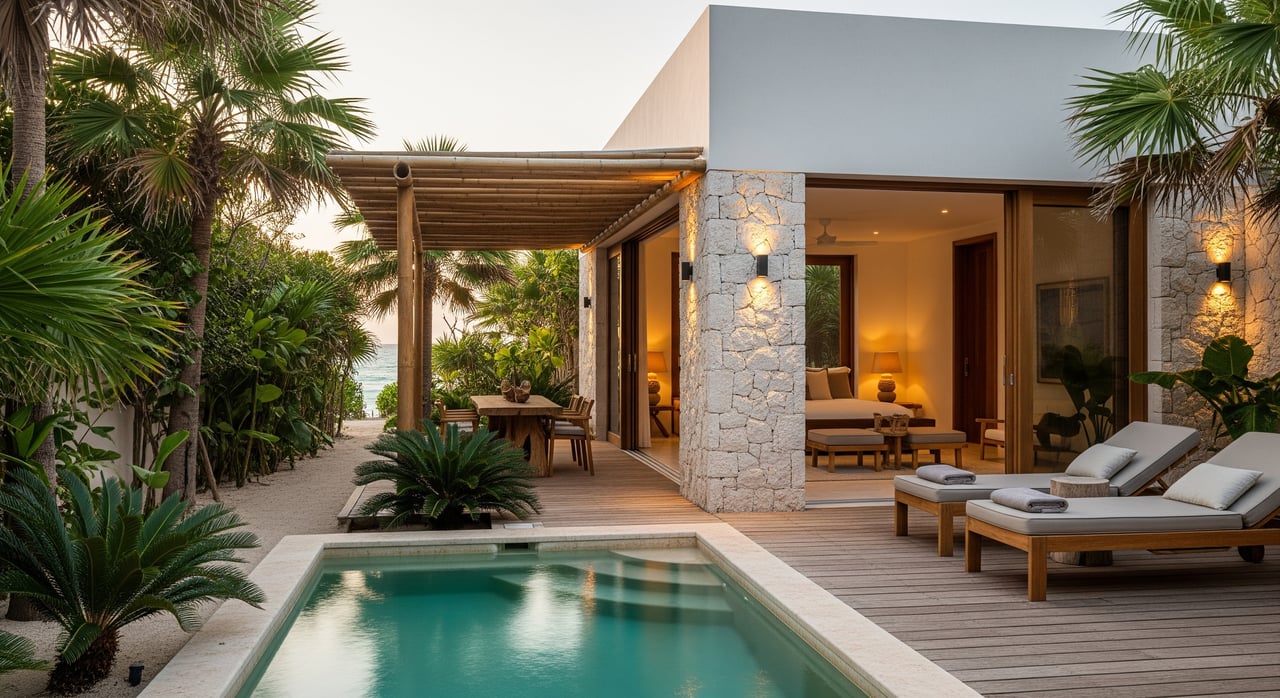
- Pool access, private or shared, is a top booking filter in Tulum.
- Outdoor living matters: terraces, shaded patios, and small gardens.
- Wellness hooks, such as proximity to studios or on‑site services, support higher ADR.
- Rooftop and social spaces draw groups and longer stays.
- Secure parking or gated entry helps guests renting cars.
- Workspace access and strong Wi‑Fi are essential for mid‑term bookings.
- Eco‑friendly features like solar or responsible water systems resonate with mindful travelers.
In‑unit features that convert
- Reliable high‑speed internet with speeds listed in the description.
- Air conditioning in bedrooms and living areas.
- A well‑equipped kitchen for week‑long or monthly stays.
- In‑unit or onsite washer and dryer.
- Flexible, clear self check‑in and professional photography.
- Comfortable beds, blackout curtains, and consistent climate control.
- Clear cleaning standards and safety information.
- Instant book, recent positive reviews, and polished listing copy.
Pricing, minimums, and product fit
Match product to guest type
Studios and one‑bed units fit weekenders and solo remote workers. Multi‑bedroom homes or villas serve groups, retreats, and families. Aligning layout and amenities with your primary segment simplifies marketing and improves review quality.
Calibrate minimum stays by season
Shorter minimums help capture weekend and last‑minute demand in high season. Longer minimums and weekly or monthly discounts appeal to mid‑term guests in shoulder and low seasons. Adjust these settings as you monitor lead times and conversion.
Consider value‑add bundles
Airport transfers, curated wellness packages, or breakfast add convenience and can lift ADR when delivered reliably. Only offer bundles you can fulfill consistently to protect ratings.
Seasonality and stay patterns in Tulum
High season: December to April
This stretch includes holidays and popular spring dates. Demand and ADRs peak, and competition for length of stay increases. Strong listings with fast response times capture outsized share.
Shoulder season: May to August
Early summer can hold, then demand starts to soften with heat and humidity. Value positioning, weekly discounts, and improved amenities help you maintain occupancy.
Low and rainy season: September to November
This is typically the softest period for ADR and occupancy. The window attracts value seekers and longer remote stays. Mid‑term pricing and standout work amenities are your allies here.
Short‑term vs. mid‑term patterns
- Short‑term stays typically run 2 to 7 nights, with bookings 1 to 8 weeks ahead in high season and shorter lead times later in the year.
- Mid‑term stays often range from 14 to 90+ nights. These guests prioritize internet speed, workspace, laundry and long‑term discounts over nightly price alone.
Seasonal risks to watch
Sargassum season can affect the perceived value of beach‑centric trips, which may ripple into inland demand. Weather events can raise cancellations and insurance costs. New supply deliveries can compress ADR and occupancy until absorbed.
Operations that unlock yield
Listing marketing and channel mix
Distribute on multiple channels with channel‑specific pricing. Invest in professional photography, complete amenity lists, and fast messaging. Use dynamic pricing tools to ride demand spikes and reduce vacancy.
Management model and cost structure
You can self‑manage, hire a local full‑service manager, or blend the two. Build a full operating schedule that includes cleaning, laundry, utilities, internet, waste, security, pool and landscape care, furniture reserves, HOA, and municipal fees. In a tropical climate, plan an annual maintenance reserve for AC, pumps and exterior finishes.
Regulation, permits and taxes
Confirm municipal short‑term rental requirements and any tourism registrations or safety standards. Understand how Mexico taxes rental income, including potential treatment differences between transient and long‑term leases. Work with a qualified advisor on ISR and IVA compliance, and secure appropriate insurance including named storm coverage.
Reviews and the repeat cycle
Conversion and ADR correlate with review quality. Rapid recovery from any incident, clear communication, and local partnerships for concierge or wellness services can increase both occupancy and the chance of direct rebookings.
Data to verify before you buy
Essential performance checks
- Monthly ADR, occupancy, and RevPAR by unit type for the last 12 to 36 months in La Veleta or the immediate micro‑market.
- A comparable set of the top 20 listings in La Veleta with rates, minimum nights, amenities, and review scores.
- A pipeline view of new developments and estimated absorption.
- A complete operating cost schedule and property management quotes.
- A regulatory review of current short‑term rental rules and any pending changes.
Questions for property managers
- What booking lead times and cancellation rates do you see by month?
- Which features consistently allow a 10 to 20 percent ADR premium in La Veleta?
- How many booked nights per month do comparable units achieve in high, shoulder, and low seasons?
- What are typical cleaning fees, management fees, and per‑stay costs in the neighborhood?
- Any HOA rules or municipal restrictions that impact renting?
Build three scenarios and stress tests
Model conservative, base, and upside cases for ADR and occupancy. Stress test for two slow seasons in a row, a heavy delivery year of new supply, and higher regulatory or insurance costs. Keep a maintenance and CapEx reserve appropriate for the climate.
Quick decision checklist
- Validate your exact location for walkability to cafés, wellness studios and town services.
- Collect 12 to 36 months of La Veleta micro‑market data on ADR, occupancy, and lead times.
- Align floor plan and amenities with your target guest segment.
- Set seasonal minimums and discounts to balance short‑term and mid‑term demand.
- Price in full operating costs, management, insurance, taxes, and a maintenance reserve.
- Confirm short‑term rental permits and tax obligations with local advisors.
If you want a data‑led search and a smooth cross‑border purchase in La Veleta, our team can help you zero in on the right assets and underwriting. With a bilingual advisory model, Private Office resources, and on‑the‑ground execution, E&V Tulum guides you from shortlist to closing and into operations.
FAQs
When is occupancy highest in La Veleta?
- Peak demand typically runs from December through April, driven by holidays and dry‑season travel.
Which amenities most impact La Veleta bookings?
- Pool access, strong Wi‑Fi with a workspace, outdoor living areas, AC throughout, and proximity to cafés and wellness studios are top drivers.
How do digital nomads affect mid‑term demand?
- They anchor shoulder and low‑season occupancy with 2 to 12+ week stays when listings offer reliable internet, laundry, and long‑term discounts.
What operating costs should I expect?
- Plan for management fees, cleaning and laundry, utilities, internet, security, pool and landscaping, HOA dues, maintenance reserves, taxes and insurance.
What regulations apply to short‑term rentals in Tulum?
- Municipal rules and licensing can change, so confirm current short‑term rental permits, tourism registrations, safety standards, and tax obligations before launch.
How do I evaluate a specific unit’s potential?
- Pull La Veleta comps and 12–36 months of ADR and occupancy data by unit type, verify location benefits, and stress test three scenarios before committing.