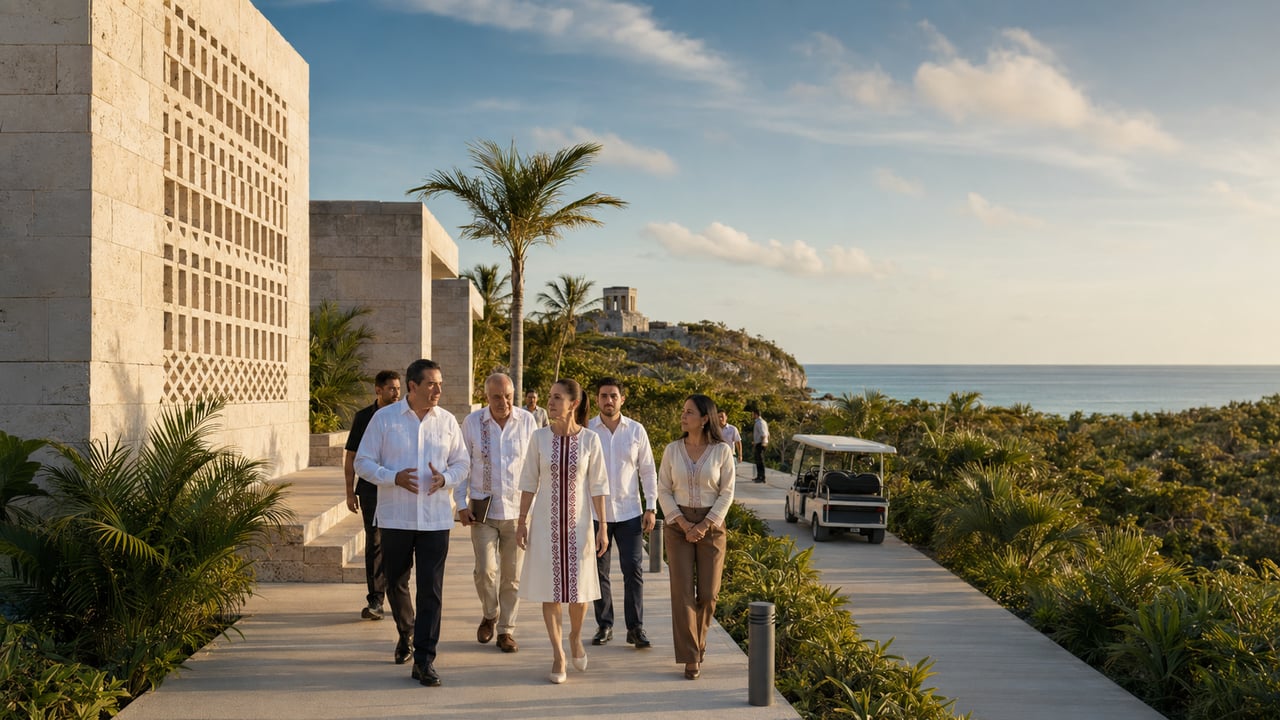
President Claudia Sheinbaum’s visit brought new measures intended to improve the visitor experience and strengthen confidence in Tulum.
Tulum continues to evolve. Its rapid international growth has brought visibility and investment, but also important conversations about accessibility, mobility, environmental protection and the experience offered to both residents and visitors.
During her visit to Tulum on July 17, 2026, Mexico’s President Claudia Sheinbaum addressed several of these concerns through the announcement of Plan Tulum Renace—a coordinated initiative designed to make the destination more accessible, organized and welcoming.
The visit placed Tulum firmly on the national agenda and signaled renewed attention to one of Mexico’s most internationally recognized destinations.
A More Accessible Parque del Jaguar
One of the most significant announcements concerned Parque del Jaguar, the protected natural area surrounding Tulum’s archaeological zone and historic beaches.
Under the new plan, general access to Parque del Jaguar and its public services will be free. Visitors who choose to use the electric transportation system inside the park will pay a separate fee.
The entrance structure will also be modified to make the traditional access point clearer and more visible, while a new ecological parking area is planned for the park’s southern entrance.
These measures are intended to simplify the visitor journey and reconnect travelers with the beaches, natural environment and cultural heritage that have long defined Tulum.
Reduced Access Fees
The federal government also announced reduced combined admission fees for the archaeological zone and protected natural area:
- MXN $80 for Mexican visitors, with free admission on Sundays.
- MXN $265 for international visitors.
Lower and clearer fees may help make Tulum’s principal cultural attraction more accessible while improving the overall experience of visiting the area.
Mobility, Security and Visitor Experience
Plan Tulum Renace extends beyond entrance fees. It includes electric mobility within Parque del Jaguar, a visitor assistance and safety program coordinated with the National Guard, and professional training and certification for tourism service providers.
Together, these measures address a broader need: ensuring that Tulum’s growth is supported by better service, clearer information and more efficient infrastructure.
For an international destination, the quality of each stage of the visitor experience matters—from arrival and transportation to safety, hospitality and access to cultural attractions.
Addressing Tulum’s Environmental Reality
President Sheinbaum’s wider visit to Quintana Roo also included attention to sargassum, one of the Mexican Caribbean’s most visible seasonal challenges.
Sargassum is a natural and variable regional phenomenon that requires long-term coordination rather than temporary responses. Federal attention to its collection, management and mitigation is therefore relevant not only to tourism, but also to coastal protection and the quality of life of local communities.
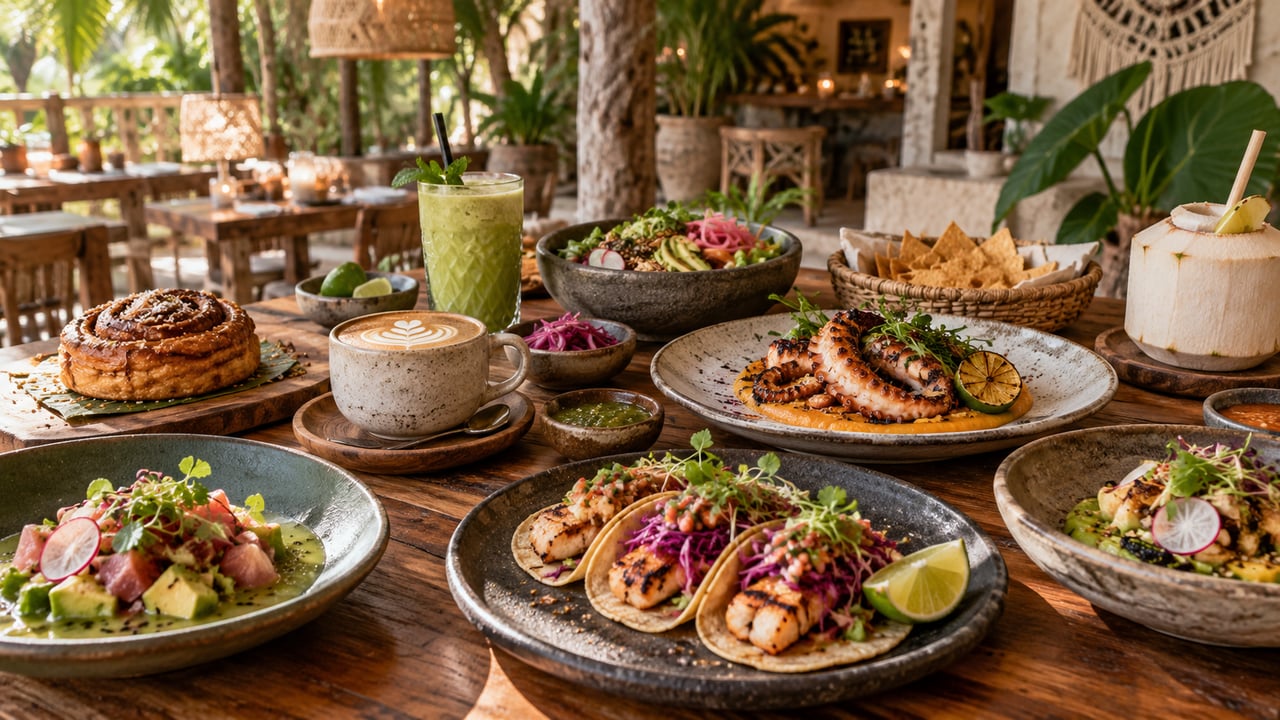
It is equally important to remember that Tulum extends beyond its coastline. Cenotes, lagoons, jungle landscapes, archaeological heritage, gastronomy and wellness experiences give the destination a diverse identity throughout the year.
What This Means for Tulum
Government announcements alone do not transform a destination. The lasting impact of Plan Tulum Renace will depend on its implementation, maintenance and coordination with local businesses, residents and tourism operators.
Nevertheless, the presidential visit represents a constructive step. It recognizes the challenges Tulum has experienced while reaffirming its strategic importance to Mexico’s tourism economy.
For residents, business owners and real estate investors, improvements in access, mobility, public spaces, security and destination management can contribute to a healthier environment for long-term growth.
A Destination Entering Its Next Chapter
Tulum is no longer an emerging destination. It is an established international market entering a more mature phase—one in which infrastructure, environmental responsibility and visitor experience must develop alongside hospitality and real estate.
President Sheinbaum’s visit created an opportunity to place these priorities at the center of the conversation.
The future of Tulum will be shaped not simply by how many people arrive, but by how thoughtfully the destination welcomes them, protects its natural and cultural assets and creates lasting value for the community.
At Engel & Völkers Tulum, we follow the developments shaping the region to help our clients understand the market beyond the headlines and make informed real estate decisions.
Thinking about Tulum lately? Let us guide you.