A new music-driven hospitality project is preparing to open in Tulum. But its potential significance goes well beyond another hotel opening.
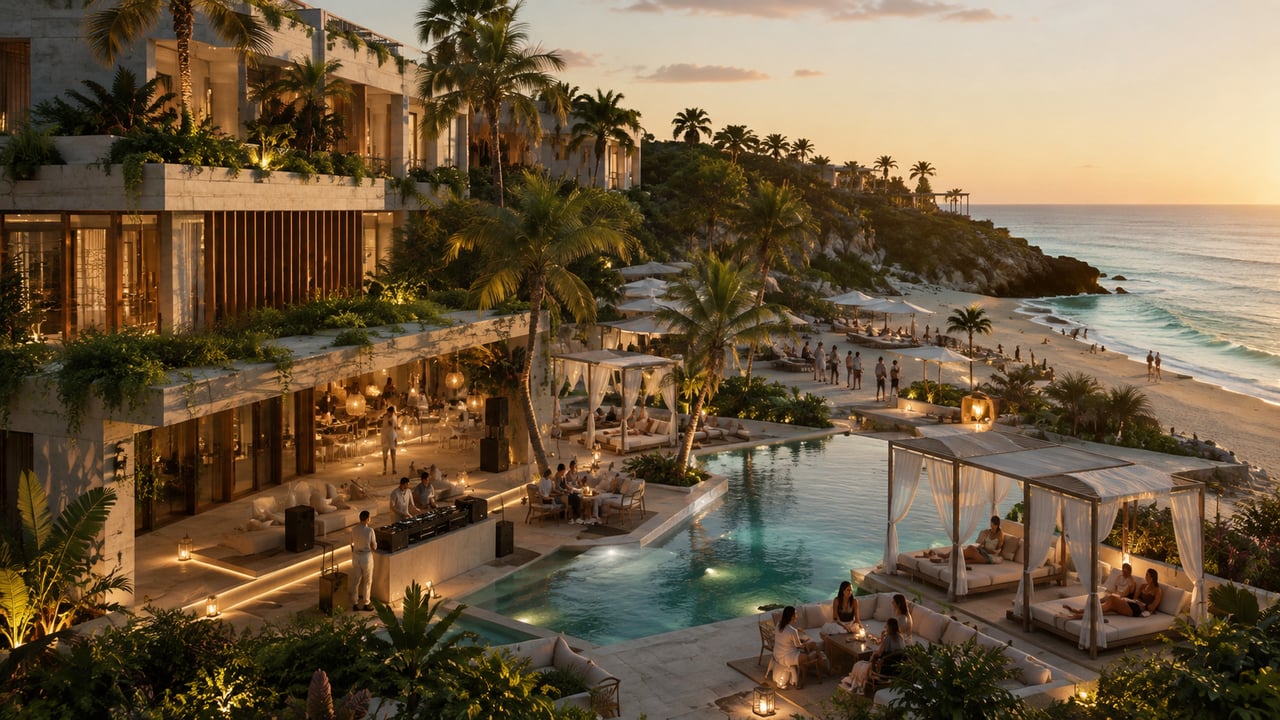
UMusic Hotel & Beach Club Tulum is expected to open in the first week of December 2026, introducing a hospitality concept built around music, culture, entertainment and creative production. The project will include 57 hotel rooms, an 800-person beach club, recording studios and spaces designed for artistic and content production. Its plans extend beyond traditional hospitality, with concerts, live events, audiovisual productions and collaborations between artists and creators expected to form part of a year-round cultural calendar. In a destination that already has extensive hospitality inventory, the number of rooms may actually be the least interesting part of the story.
What matters more is whether UMusic can create something Tulum increasingly needs: new reasons to visit—and new reasons to return.
More Than Another Hotel
Traditional hospitality generally responds to demand that already exists. Travelers choose a destination, and hotels compete for where they stay. UMusic approaches the relationship differently. Its broader hospitality model connects accommodation with entertainment, music, creators, brands and cultural experiences. The concept has roots in a music-focused experiential hospitality venture created to bring audiences closer to artists through hotels, lifestyle spaces, live entertainment and other physical experiences. In Tulum, that strategy becomes particularly interesting.
The property is being conceived not simply as a place to stay, but as a platform for concerts, music and film production, creative collaborations, brand activations and original content.One of its first announced collaborations will be with Zamna, the electronic music platform founded in Tulum that has grown into an internationally recognized cultural export.
The logic behind the model is simple:
An event creates an audience. An audience creates movement. Movement creates demand.
For Tulum, the question is whether that demand can extend beyond the walls of the hotel itself.
Why Tulum Needs New Reasons to Return
Tulum already has something remarkably difficult for destinations to build: international recognition. Its beaches, Mayan heritage, architecture, wellness culture, gastronomy, nightlife and distinctive lifestyle have made it recognizable far beyond Mexico but recognition alone does not guarantee consistent tourism demand.
As destinations mature, the challenge shifts from getting people to discover them to continuously creating compelling reasons for them to come back. That is where the arrival of UMusic becomes more relevant than a conventional hotel announcement. The project forms part of a broader alliance connected to Tulum Renace, the federal strategy focused on strengthening the destination through better tourism planning, sustainability, infrastructure, cultural programming and economic development.
The stated objective of UMusic's cultural program is also significant: expanding tourism activity beyond the traditional periods of highest demand through concerts, productions and creative experiences throughout the year. That could matter for the broader destination economy.
Visitors traveling for specific cultural experiences also interact with restaurants, transportation, retail, tours, hotels and other local services. A destination with multiple reasons to visit has more opportunities to generate different tourism cycles rather than depending overwhelmingly on a limited number of peak periods and for real estate, that distinction matters.
The Real Estate Effect
A new hotel does not automatically increase surrounding property values. The arrival of an international hospitality concept should not, by itself, be interpreted as evidence that rental yields, appreciation or residential absorption will improve. The more useful question is whether projects like UMusic can generate incremental demand.
Can they attract travelers who might not otherwise have visited Tulum?
Can cultural events encourage repeat trips?
Can they extend stays, create activity during traditionally quieter periods and expose the destination to new international audiences?
If the answer becomes yes over time, the effect could extend well beyond hospitality. Real estate depends partly on the strength of the ecosystem surrounding it. Buyers considering a second residence or lifestyle investment are not evaluating the property in isolation. They are also evaluating what the destination gives them access to.
What can they do there?
How connected is it?
What kind of community is developing around it?
How often will they want to return?
Music and entertainment add another layer to that equation. They also introduce their own global networks of artists, creators, audiences, brands and digital communities. Each becomes another channel through which Tulum can be discovered internationally. Not every visitor becomes a property buyer. Nor should tourism growth and residential performance be treated as interchangeable metrics but the relationship between a buyer and a destination often begins long before a property search.
First comes exposure. Then familiarity. Then repeat visitation. And, for some, eventually the decision to establish a more permanent connection.
That progression is especially relevant in markets shaped by international purchasers, lifestyle buyers and second-home ownership. There is another important dimension; Tulum's original international appeal was not created through real estate development alone. Independent hotels, restaurants, architects, artists, designers, musicians and entrepreneurs helped establish a cultural identity first. Tourism, hospitality investment and residential development followed. Over time, much of Tulum's visual language—jungle architecture, wellness, beach clubs and bohemian luxury—has been reproduced both locally and around the world. The next stage of the destination may therefore require more than recreating the aesthetic that originally made it famous. It may depend increasingly on building a functioning ecosystem where culture, hospitality, community, content and investment reinforce one another.
UMusic fits directly into that conversation.
A Destination Built on Reasons to Return
UMusic Hotel & Beach Club Tulum will add only 57 rooms to the destination and those rooms alone are unlikely to change Tulum.
The potentially more important asset is the ecosystem being built around them. If concerts, artists, creators, productions and international audiences generate additional reasons to travel, the benefits could circulate through hospitality, restaurants, local businesses, rentals and eventually parts of the residential market.
There are no guarantees.
The indicators worth watching after the opening will be more meaningful than the announcement itself: frequency and scale of programming, international reach, repeat visitation, seasonality, length of stay, air connectivity, rental demand and residential absorption across Tulum's different micro-markets. Ultimately, UMusic presents a much bigger question about the destination's next chapter.
Can culture generate new demand rather than simply compete for the demand Tulum already has?
If it can, the implications extend well beyond one hotel. Tulum's next phase may not be defined by how many more rooms or residences it builds. It may be defined by how many compelling reasons it creates for people to keep coming back.