You found the house. Older build, good bones, walking distance to Avenida Tulum, priced sensibly for the neighborhood. You ran the numbers using a closing-cost calculator, or maybe a buyer's guide that promised to cover "everything foreigners need to know." It quoted an acquisition tax of 2 percent. You budgeted accordingly.
That number is wrong, and it has been wrong since December 9, 2024.
On that date, Tulum's municipal government raised its property acquisition tax, known as ISAI, from 3 percent to 4 percent, a change published in the Periódico Oficial del Estado de Quintana Roo. Most of the buyer guides still circulating online have not caught up. They apply a flat "Quintana Roo rate" across the whole state, which made sense when Cancún, Playa del Carmen, and Tulum all charged something in the same neighborhood. They don't anymore. Tulum moved on its own, and the gap it created matters most for exactly the kind of resale property that makes Centro the affordable entry point into this market.
The Rate That Stopped Being a State Number
ISAI is not a federal or even a state tax in the way most buyers assume. Quintana Roo's Finance Law of the Municipalities gives each municipality room to set its own rate within state parameters, which is why Cancún, under the municipality of Benito Juárez, and Playa del Carmen, under Solidaridad, can run a different number than Tulum. For years they mostly did move together, historically clustering somewhere between 2 and 3 percent.
Tulum broke from that pattern. City officials framed the increase as a way to fund roads, utilities, and infrastructure keeping pace with the municipality's growth, and the math shows up plainly on a real transaction.
| Municipality | ISAI rate (2026) | Tax on a $500,000 purchase |
|---|---|---|
| Tulum | 4% (raised from 3%, effective Dec. 9, 2024) | $20,000 |
| Playa del Carmen (Solidaridad) | 2% to 3% | $10,000 to $15,000 |
| Cancún (Benito Juárez) | 2% to 3% | $10,000 to $15,000 |
That is not a rounding difference. On a mid-range Centro house, the gap between what a generic guide promised and what the notary actually collects can run into five figures, and it lands on top of every other line item on the closing statement.
The Second Number Nobody Puts in the Headline
Even buyers who know about the 4 percent rate often assume it applies to the number on their purchase contract. It doesn't, not automatically. ISAI is calculated on whichever is highest among three figures: the contract price, the property's cadastral value, or an independent appraisal. A notary is not choosing the most convenient number. The law tells them to choose the largest one.
This rule exists because cadastral records, which set a property's official assessed value, tend to lag behind what a property actually sells for, especially in a market where prices have moved as fast as Tulum's has over the past decade. In early 2026, Mexico's Supreme Court reinforced the point further, upholding as constitutional the tax authority's ability to audit transactions where the declared price looks suspiciously low relative to the property's real value. Under-declaring to save on ISAI is not a workaround anymore, if it ever was one. It is a flag, and it quietly raises your capital gains exposure down the road, since your declared price becomes your cost basis when you eventually sell.
Put the two rules together and you get the real mechanism: a 4 percent rate applied to whichever value the notary can defend as accurate, not whichever value is smallest.
Why Centro Feels This More Than Aldea Zama or La Veleta
This is where the tax mechanics stop being a generic Mexico explainer and start being a Centro-specific problem.
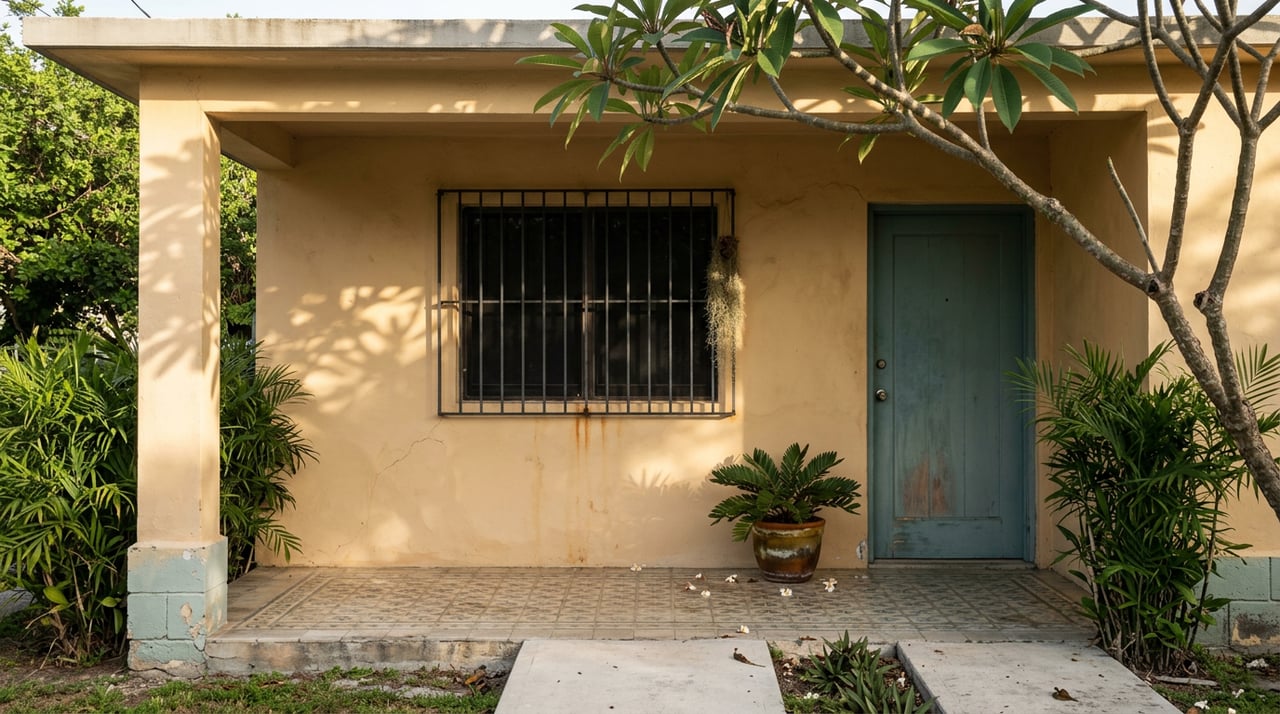
Downtown Tulum, the stretch running along Avenida Tulum, Avenida Satélite, and the Pueblo grid, is the part of the market where a typical house still trades in the roughly $257,000 to $515,000 range. It gets there partly because the housing stock is older and resale-dominated rather than newly built and freshly titled. That distinction matters more than it sounds like it should.
A condo in Aldea Zama or a new build in La Veleta usually has its cadastral value set at first titling, close in time to the current sale, which means the cadastral figure and the market price tend to sit reasonably close together. A house in Centro that has changed hands once or not at all in a decade carries a cadastral file that was set years ago, often well before the neighborhood's more recent appreciation. When that house finally sells, the appraisal, not the old cadastral number and often not even the negotiated price, is the figure most likely to come out on top under the three-value rule. The very thing that makes Centro affordable on paper, its older resale stock, is the same thing that widens the gap a notary is required to close in the buyer's favor for the tax office.
We've written before about how quickly downtown's character is shifting, from the Centro Tulum retail complex opening this fall to the changing rhythm of daily errands. That same appreciation curve, the one making Centro a more interesting place to live every year, is exactly what widens the distance between a decade-old cadastral file and today's appraisal.
What to Ask Before You Sign, Not After
None of this is a reason to avoid Centro. It's a reason to get the real number before you're committed to a price, not after you're sitting across from a notary who has already run the appraisal.
- Ask the seller for the current predial receipt and the cadastral certificate showing the property's assessed value and classification, not a receipt from several years back.
- Ask your notary directly which of the three values, contract price, cadastral value, or appraisal, is likely to set your ISAI base, and get that estimate in writing before you sign a purchase agreement.
- If the property hasn't been formally appraised recently, consider commissioning an independent appraisal early in your due diligence rather than waiting for the notary's mandatory one at closing, so the number doesn't arrive as a surprise.
- Build your budget around 4 percent of the higher of those values, not the 2 percent figure still floating around most general Mexico buying guides.
A notary's preliminary closing estimate, sometimes called a presupuesto, is not a courtesy document. Treat it as the real number and treat every calculator you found online as a starting guess.
A Few Questions Worth Settling Early
Does the higher rate apply differently to foreign buyers than to Mexican buyers? No. ISAI is assessed on the transaction, not the buyer's nationality. Foreign buyers carry the added cost of a fideicomiso bank trust on top of it, not instead of it, since Tulum sits inside Mexico's restricted coastal zone.
Can the rate be negotiated? The rate itself is fixed by municipal law and isn't something a notary or agent can adjust. Who pays it is a separate, negotiable question. Convention in Tulum has the buyer covering ISAI, though a motivated seller in a slower-moving segment of the market will sometimes agree to absorb part of it as a concession.
If I declare a lower purchase price, does that actually lower my tax? Not reliably, and it can cost you later. The three-value rule means a low declared price simply invites the notary to use the appraisal instead, and Mexico's Supreme Court has upheld the tax authority's ability to audit declarations that look under-market. A lower declared price also lowers your cost basis, which raises the capital gains tax you'll owe whenever you sell.
Closing costs in Tulum are not a mystery once you know which rule is doing the work. They're a mystery only if you're reading a guide that hasn't updated its Tulum number since before December 2024.
If you're weighing a resale purchase in Tulum Centro and want a straight answer on what your specific closing statement will actually look like, before you're at the notary's table, Engel & Völkers Tulum can walk through the real numbers with you. Start your Tulum search and chat with a Private Office advisor on WhatsApp.