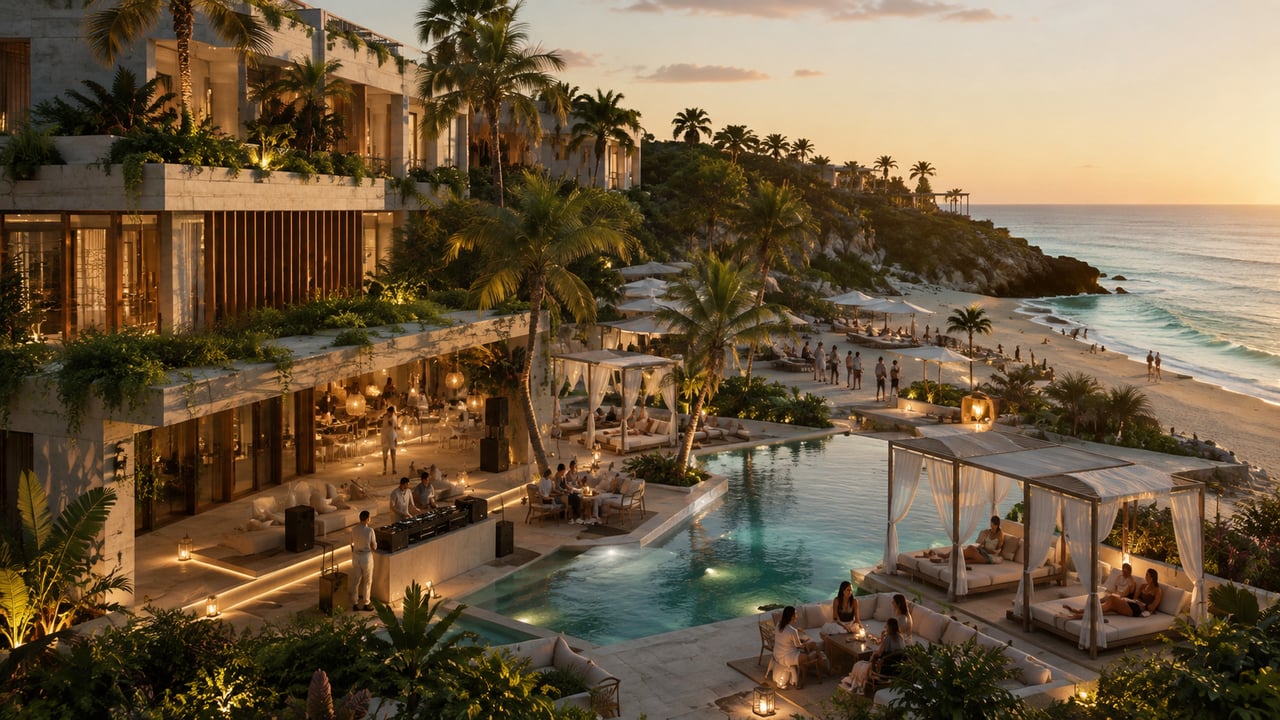
Buying a slice of Tulum’s Hotel Zone is a dream. It is also a place where federal coastal rules, environmental protections, and local zoning come together in ways that can surprise even experienced buyers. If you want a beachfront home or boutique hospitality asset, you need a clean plan for title, permits, and operations.
In this guide, you will learn the key rules that shape purchases in Tulum’s Hotel Zone, the documents to request, the permits to expect, and the red flags that stop a deal. You will walk away ready to ask the right questions before you wire a deposit. Let’s dive in.
What makes the Hotel Zone unique
Buying in Tulum’s Hotel Zone means your parcel likely touches protected federal coastline and sensitive ecosystems. Federal rules take precedence over local permits. That means a municipal building license does not replace federal clearances.
- The restricted zone. Foreign buyers can own along coasts using a bank trust or a Mexican entity under Article 27 of the Mexican Constitution. Structure depends on whether you plan personal use, rentals, or a full commercial operation.
- The federal beach strip. The federal maritime-terrestrial zone, known as the federal maritime-terrestrial zone (ZOFEMAT), is generally a 20-meter public band measured from the maximum high-tide line. You cannot privatize it. Exclusive use or permanent works in that strip require a federal concession.
- Environmental review. SEMARNAT decides whether your project needs a formal environmental impact review (MIA) under Mexico’s environmental impact rules. If required, public consultation and technical studies apply. Conditions can limit height, buildable area, or wastewater solutions.
Zoning and permitted use in the Hotel Zone
Local planning documents translate federal standards into what you can build. Always request the latest municipal plan and the specific polygon for your lot.
- Use and density. Tulum’s planning instruments identify primary uses such as turístico-hotelero, mixed, or conservation, along with density and height caps. Many hotel-area excerpts reference metrics like COS/CUS and, in some cases, a 12-meter or 3-level height cap. These numbers vary by exact unit. Get the current polygon and a land-use certificate from the municipality. You can reference Tulum’s PMOTDU/PDU to understand how these rules are organized.
- Variations by parcel. Adjacent lots can have different density, setbacks, and permitted use. If your intended use does not match the assigned use, budget time and cost for a change of land use.
Overlays to check on a beachfront lot
Certain overlays add rules on top of your base zoning. Confirm each one before you finalize price or plans.
- ZOFEMAT overlay. If the lot intersects the federal beach strip, you may need a concession for any exclusive occupation. Works or beach furniture in the ZOFEMAT without authorization are subject to enforcement.
- Protected natural areas. The Sian Ka’an Biosphere Reserve and related marine or lagoon systems carry strict limits. Confirm if your parcel is inside the reserve or a protected buffer.
- Archaeological polygons. If you are inside or near a protected zone, you must follow INAH archaeological authorizations. INAH can require salvage, mitigation, or even suspend works regardless of municipal permits.
Environmental protections that shape your plan
Building by the Caribbean Sea is different because you share space with public coastline, mangroves, dunes, and a fragile aquifer. Expect additional steps and design around them early.
- ZOFEMAT and concessions. The ZOFEMAT is public domain. If you plan a pier, permanent palapas, or exclusive beach setup, you will likely need a federal concession. Confirm whether a concession exists, its expiration, and its conditions. If there is none, plan to apply for a ZOFEMAT concession or redesign to avoid that public strip.
- Wastewater in a karst region. Tulum sits on porous limestone with cenotes and a coastal reef connected to groundwater. Improper septic systems can pollute aquifers and reefs. Regulators often require engineered treatment plants and, if applicable, discharge permits. This is not just regulatory. Peer-reviewed research on Yucatán cenotes documents contamination risks tied to inadequate wastewater handling.
- MIA thresholds. Larger projects, expansions, or coastal works may trigger a MIA. SEMARNAT can impose mitigation, monitor wastewater performance, cap density, or deny proposals. Plan timelines that account for studies, filing, and resolution.
Ownership and closing structures for foreigners
You can buy in the Hotel Zone. What matters is choosing the right legal structure and confirming title is real, complete, and free of agrarian or federal conflicts.
- Private title with RPPC record. The simplest scenario is fee-simple title with a notarial deed recorded in the Registro Público de la Propiedad y del Comercio (RPPC). Always compare the deed, cadastral record, and certified RPPC folio for mortgages, easements, and liens.
- Fideicomiso for residential use. In the restricted coastal zone, foreigners commonly use a 50-year renewable bank trust to hold residential property rights as beneficiaries under Article 27 of the Mexican Constitution. You retain full rights to use, sell, or transfer the beneficial interest.
- Mexican corporation for commercial assets. If you plan a hotel or hospitality operation, many investors form a Mexican entity. This is a business and tax strategy decision. Align it with your intended use and consult your advisors early.
- Ejido and agrarian land. Some Riviera Maya parcels have agrarian roots. Sales require special steps through the Registro Agrario Nacional (RAN). If a lot is ejidal or was once ejidal, request RAN certificates and ensure proper conversion to private domain under the agrarian law framework described by the government in the agrarian property rules. Avoid informal transfers without proof of regularization.
- Common title risks in the region. Watch for missing RPPC inscriptions, unresolved ejido claims, parcels overlapping ZOFEMAT without a concession, or gaps in the chain of title. Federal agencies can also suspend works tied to environmental noncompliance even where title seems clean.
Step-by-step permitting roadmap
Every project is unique, but most Hotel Zone deals follow a similar sequence. Use this as your high-level playbook and verify each step with local professionals.
- Title and registry review
- Obtain the certified RPPC folio, deed copies, and cadastral map. Confirm liens, easements, and prior transfers.
- Zoning and land-use confirmation
- Request the official land-use certificate and planning polygon from the municipal planning office. Cross-check use, density, setbacks, and height with Tulum’s PMOTDU/PDU. If you need a use change, evaluate timing and feasibility before negotiating price.
- ZOFEMAT verification
- Order a constancia de uso o no uso from the municipal ZOFEMAT office and check the federal status. If the beachfront strip needs a concession, plan the application using the federal process to apply for a ZOFEMAT concession.
- Environmental review (SEMARNAT)
- Determine if your proposal needs a MIA. If yes, prepare technical studies, file under the environmental impact rules, allow for consultation, and plan for conditions or modifications.
- Archaeological clearance (INAH)
- If you are in or near an archaeological polygon, request INAH review and follow mitigation or salvage measures described in INAH archaeological authorizations.
- Water and wastewater permits
- Confirm municipal sewer availability. If not available, design an engineered treatment solution. Secure extraction and discharge permissions within CONAGUA’s permitting framework.
- Municipal building permit
- Once federal overlays are cleared or determined not required, obtain the municipal building license and utility authorizations. Expect conditions such as landscaping buffers, setbacks, or restricted work hours.
- Closing and structure for foreign buyers
- Finalize your bank trust or corporate structure, settle taxes with the notary, and record transfers at the RPPC. Align your structure with your intended use under Article 27 of the Mexican Constitution.
Due-diligence checklist before any deposit
Request these documents and confirmations upfront. Build them into your offer and escrow timing.
- Certified RPPC folio and chain of title. Match owner names, area, and boundaries to the cadastral record.
- Seller identification and deed copies. Ask for certificates showing no liens or embargoes.
- Planning polygon and official land-use certificate. Confirm use, density, height, and setbacks with current municipal documents.
- ZOFEMAT status. Secure a constancia de uso o no uso and copies of any federal concession for beachfront occupation.
- Environmental authorizations. Obtain any MIA resolutions and conditions, or a written statement from your consultant on what is pending under the environmental impact rules.
- Archaeology and protected areas. Verify whether you need INAH review and whether the lot is within or near protected areas like Sian Ka’an.
- Wastewater plan and permits. Confirm an engineered solution and, if required, discharge authorization. Use the science on cenotes as your risk baseline with this peer-reviewed research on Yucatán cenotes.
- Survey and high-tide line. Commission a georeferenced topographic survey that clearly marks the maximum high-tide line relative to your boundaries. This informs ZOFEMAT status.
- Agrarian status (if applicable). If there is any indication of ejido origin, obtain RAN certificates and proof of conversion under the agrarian property rules.
Red flags that should pause the deal
- The seller cannot produce a certified RPPC history or a clean chain of title.
- The lot intersects the ZOFEMAT and there is no concession or constancia.
- The parcel is still ejido or has unresolved agrarian claims.
- There is no wastewater plan or evidence of compliant treatment and discharge.
- There are active federal or archaeological enforcement orders or pending litigation.
Practical tips for buyers and developers
- Budget for the coast. Account for studies, concessions, and environmental engineering early. This protects timelines and design.
- Sequence matters. Federal overlays often come before municipal building permits. Clear your ZOFEMAT and MIA status first.
- Work with specialists. Engage a local notary, a Mexican real estate attorney, an environmental consultant familiar with MIA processes, and a licensed surveyor before escrow.
- Keep documents current. Plans and concessions evolve. Always ask for the most recent municipal polygon, federal resolutions, and RPPC folios.
How E&V Tulum supports your Hotel Zone move
You deserve a process that matches the caliber of the asset you are buying. Our team blends Engel & Völkers’ global reach with local execution. You get a bilingual, step-by-step experience designed for North American and international buyers.
- Concierge guidance. We clarify land use, overlays, and permit sequencing so you can set realistic budgets and timelines.
- Cross-border expertise. Our Cross Border Program and Private Office advisors help you choose the right purchase structure and coordinate with your legal and tax teams.
- Curated opportunities. From boutique hotels to design-led villas, we present options that align with your goals and operational plans.
- Developer and project experience. We support pre-construction and hospitality acquisitions with the marketing and process rigor that protect value.
Ready to explore Tulum’s Hotel Zone with confidence? Start a conversation with E&V Tulum. We are here to help you make a smart, beautiful move.
FAQs
Can foreigners buy beachfront property in Tulum’s Hotel Zone?
- Yes. Foreigners can buy in the coastal restricted zone using a bank trust or a Mexican company under the rules set by Article 27 of the Mexican Constitution. Structure depends on your use case.
What is the ZOFEMAT and why does it matter for a Tulum beach lot?
- The ZOFEMAT is a 20-meter public band from the maximum high-tide line, managed by the federation. Exclusive use or permanent works in that strip require a federal concession.
Do I need an environmental impact assessment (MIA) to build in the Hotel Zone?
- Possibly. Larger builds, expansions, and coastal works often trigger a MIA under Mexico’s environmental impact rules. SEMARNAT decides the scope and conditions.
How do I verify if my lot is near protected areas or archaeology sites in Tulum?
- Check municipal maps, confirm proximity to the Sian Ka’an Biosphere Reserve, and request INAH status for archaeological polygons. If applicable, obtain INAH authorization before works.
What wastewater solutions are acceptable for beachfront homes or hotels in Tulum?
- Expect an engineered treatment system and, if required, discharge permits under CONAGUA’s permitting framework. Regulators scrutinize designs due to proven aquifer sensitivity.
What documents should I ask for before sending a deposit on a Tulum beach property?
- Request the RPPC folio and deed chain, zoning polygon and uso de suelo, ZOFEMAT constancia or concession, MIA resolutions, INAH status, a current survey with high-tide line, and any wastewater permits or plans.