If you are looking at commercial or mixed-use property in Tulum, Centro deserves a close look first. This is where daily commerce, services, and much of the town’s central foot traffic come together, which can make location quality just as important as the building itself. If you want to understand what to buy, how to structure it, and what to verify before you commit, this guide will help you focus on the details that matter most. Let’s dive in.
Why Tulum Centro stands out
Tulum Centro is the town’s commercial and service core. According to Tulum’s municipal development plan, commercial and service uses are concentrated in the center, with mixed uses also largely centered there, while major commercial activity is located along the main avenues rather than more auto-oriented service corridors. That distinction matters when you compare a street-front retail space in Centro with a parcel better suited for vehicle-based services along Highway 307. You can review that framework in the municipal development plan for Tulum Centro.
For a buyer, this means Centro is not just a central address. It is a part of town where planning documents already support commercial and mixed-use activity, which can make it easier to evaluate how a property fits into the broader urban pattern.
Tourism supports the demand base
Commercial real estate works best when there is a steady stream of potential customers, tenants, and visitors. In Tulum, that demand is supported by both local activity and tourism.
According to SEDETUR’s latest “Cómo Vamos” report, Tulum recorded 1,679,190 tourists from January through December 2025. The municipality also had 238 hotels and 11,875 rooms in January 2025, while the Tulum archaeological zone received 150,620 visitors in January 2025, up 34.2% year over year. The same report notes that the Tulum airport handled 149,465 passengers in 2024, including 93,370 international passengers.
That does not guarantee performance for every asset, but it does show why Centro remains relevant for retail, service, and mixed-use property. The market is supported by a mix of residents, domestic travelers, and international visitors.
Best-fit asset types in Centro
Not every commercial format fits every block. In Tulum Centro, three property types are especially relevant.
Street-retail storefronts
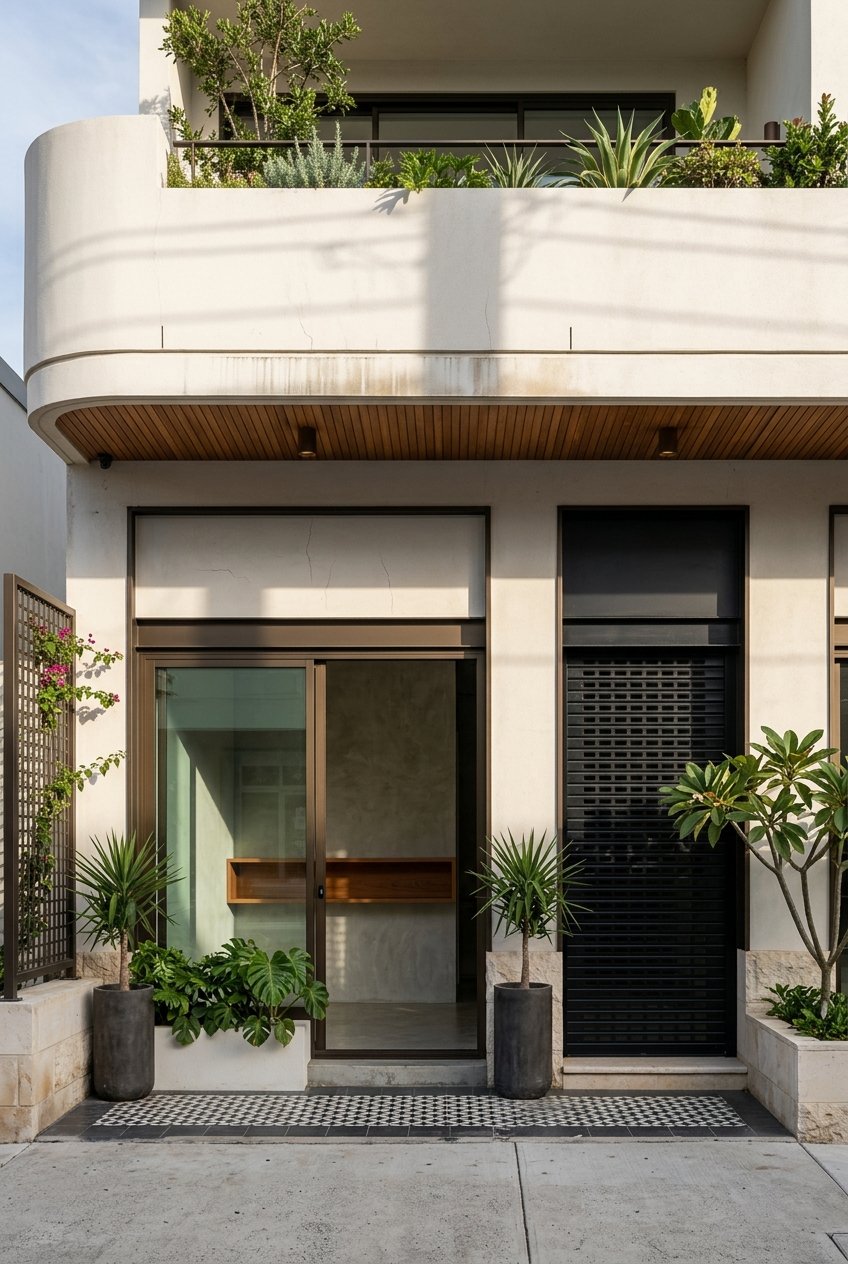
Street-level retail can benefit from central visibility, walkability, and frontage along established commercial streets. This is especially important on corridors where pedestrian movement and signage quality affect how easily a business is seen and accessed.
Small office buildings
Small office assets can work well for service-based businesses that want a central location near the town’s commercial core. These properties are often evaluated less on tourism exposure alone and more on convenience, accessibility, and long-term utility.
Condo-plus-retail mixed-use buildings
Mixed-use formats are also recognized in the central area and along major avenues. Tulum’s planning framework treats mixed-use buildings according to each use within the project, rather than as one generic category, which is an important detail for buyers evaluating entitlement and compliance.
Why frontage and walkability matter
In Centro, value is not only about lot size or built area. It is also about the quality of the corridor your property sits on.
Tulum’s urban image and landscape regulations identify Av. Tulum as a strategic corridor that should prioritize pedestrians and non-motorized mobility, helping connect the center, the hotel zone, and nearby areas. They also describe Av. Coba as a northern gateway with pedestrian and cycling improvements, lower-height development in some stretches, and tighter controls on billboards and visual clutter. You can review those rules in the municipal urban image and landscape regulations.
For you as a buyer, the takeaway is simple: frontage, signage, and walkability can directly affect the usefulness and appeal of the asset. A property on a people-oriented corridor may underwrite differently from one that depends more on vehicle traffic.
Check zoning parcel by parcel
One of the biggest mistakes buyers make is assuming that a broad “Centro” label tells the full story. It does not.
Tulum’s transparency pages continue to list the Tulum Centro PDU 2006–2030 and related planning documents, which is why parcel-level verification matters. Corridor rules and use allowances can vary by location, even within the same general area. Before you move forward, it is wise to confirm the exact property against the municipality’s planning and territorial-ordering files.
This is especially important for mixed-use, retail, and redevelopment opportunities, where small planning differences can affect what you can legally build, operate, or lease.
Understand the permit path early
Before you focus on finishes or rent projections, make sure you understand the municipal paperwork. Tulum’s construction regulations state that a constancia de uso de suelo is required and must align with the applicable development and ecological plans.
The municipal construction regulation explains that commercial-use files may require:
- Proof of ownership or possession
- Current property tax status
- Photos of the premises
- Hacienda registration
- A health license when food or alcohol is involved
- An anteproyecto and descriptive memo for significant projects
The same regulation notes that the certificate is generally valid until the property’s use, ownership, corporate name, or commercial business line changes. For buyers, that means permit review should happen early, not after a deposit is already at risk.
Foreign buyers and ownership structure
If you are a foreign buyer, ownership structure is one of the most important parts of the process. Mexico’s federal rules are the starting point.
The Secretaría de Relaciones Exteriores explains that foreigners cannot directly acquire land in the restricted zone, which includes the 50-kilometer coastal zone. Residential property in that zone is typically held through a fideicomiso, usually for up to 50 years and formalized in a public deed. By contrast, a Mexican company with a foreign-admission clause can acquire non-residential property in the restricted zone, with notice requirements after purchase.
This is one reason mixed-use property can require extra planning. If a building includes both residential and commercial components, the ownership structure may need more careful review than a pure commercial asset would.
Due diligence should go beyond title
A smart acquisition review is not only about who owns the property. It is also about whether the property is current, compliant, and usable for your intended plan.
Consular guidance from the Mexican government says buyers should verify that the property is free of mortgages and that property tax and water charges are current. It also states that acquisitions should be formalized before a public notary, and that foreign legal entities may need legalized or apostilled corporate documents translated into Spanish by an official translator. You can review that guidance through the Mexican consular property-acquisition overview.
You should also review environmental compatibility. Tulum’s POEL bitácora ambiental serves as a public registry for the local ecological ordering system, which is intended to balance development with natural-resource preservation. In practice, that means environmental and land-use review should sit alongside title, tax, and construction checks.
Think about lease quality, not just rent
If your goal is income, the lease matters as much as the location. Commercial leases in Mexico can be structured in different ways depending on the asset and business model.
According to Mexican real estate legal guidance, common structures can include operating leases, financial leases, turnkey contracts, and triple-net-style arrangements for commercial and service properties. For a Centro property, key questions include who pays for maintenance, utilities, insurance, and build-out costs, along with how the permitted use is written into the lease.
You should also pay attention to rent-adjustment clauses. As discussed in commentary on rent increase clauses in Mexico, annual increases are often negotiated with reference to the INPC or CPI. That means income quality is shaped by both lease terms and the location itself, not just the starting rent figure.
A practical buyer checklist
If you are evaluating commercial or mixed-use property in Tulum Centro, keep your review focused on the basics first.
- Confirm the exact parcel within the applicable planning files
- Verify the current and intended use with the constancia de uso de suelo process
- Check whether mixed-use components trigger different compliance requirements
- Review ownership structure before paying a deposit, especially if residential use is involved
- Confirm title status, taxes, water payments, and notarial closing requirements
- Review ecological compatibility through the local environmental registry
- Underwrite frontage, signage, walkability, and corridor quality, not just square meters
- Evaluate lease structure, operating expenses, and rent-adjustment terms if income is part of your plan
Why local, bilingual guidance matters
Buying in Tulum Centro can be attractive, but it is rarely a plug-and-play transaction. A strong opportunity often depends on how well the parcel, permits, ownership vehicle, and lease logic all fit together.
That is where clear, cross-border guidance can make a real difference. If you are considering a storefront, office asset, or mixed-use opportunity in Centro, E&V Tulum can help you navigate listings, process clarity, and the local details that shape a smarter purchase.
FAQs
What makes Tulum Centro important for commercial property buyers?
- Tulum Centro is identified in municipal planning documents as the town’s main commercial and service core, with commercial and mixed uses concentrated in central areas and along major avenues.
What types of commercial assets fit Tulum Centro best?
- Street-retail storefronts, small office buildings, and condo-plus-retail mixed-use properties are among the most relevant asset types for Centro based on the planning framework described in municipal documents.
What should foreign buyers know about buying mixed-use property in Tulum Centro?
- Foreign buyers should review ownership structure carefully because residential components in the restricted zone may require a fideicomiso, while certain non-residential property may be acquired through a Mexican company with the proper notices.
What permits matter when buying commercial real estate in Tulum Centro?
- A constancia de uso de suelo is a key requirement, and supporting documents may include proof of ownership, property tax status, premises photos, Hacienda registration, and additional approvals for certain business uses.
Why is parcel-level due diligence important for Tulum Centro real estate?
- Parcel-level review matters because land-use and corridor rules can vary block by block, even within Centro, which can affect what you are allowed to build, operate, or lease.
What lease terms should investors review for Tulum Centro commercial property?
- Investors should look beyond base rent and review who pays for maintenance, utilities, insurance, build-out costs, permitted use restrictions, and how annual rent increases are handled.